
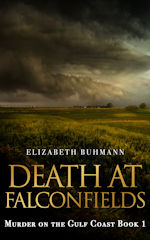
The first book in the new series is now available for pre-order! Pre-order here. It’ll be released on October 15th. About the setting: This one takes place in a small town in southern Alabama, where an old plantation still casts a shadow. Falconfields is fictional, but its features are drawn from reality. According to local legend, the original plantation house was burned down in vengeance by the ghost of a young Black woman. Its rich land was once worked by a hundred enslaved people, then sharecropped by their descendants. All that remains is an old house surrounded by fields rented out and farmed by machines.
My detective, Gil Tillier, “was startled to read that there were at one time more than thirty thousand plantations in the South. A thousand acres would have been an average size, and a plantation that size would likely be worked by thirty to forty slaves, although a few plantations had a thousand or more. He queried further and said, “Holy shit.” By 1860, there were four million enslaved people in the South.” (Chapter 6, Death at Falconfields)
Plantations are not the subject of my book, but they’re part of the setting, the Gulf Coast from Louisiana to the Florida Panhandle. Most plantations were defunct soon after emancipation, belonging to the past by more than a hundred and fifty years, generations. But they are still a dimension of the landscape. The Forgotten South is an evocative blog that explores sites such as these–abandoned plantations, old schools, churches, and ghost towns in the South.
Writing this volume, I was drawn into the subject of plantation tourism. Some 300 plantations across the southern United States generate billions in revenue each year. Many of these sites romanticize the privileged lives of the antebellum planter class. Some make no mention of slavery, in spite of the fact that the grand houses were built by enslaved people to display wealth generated by slave labor. Others soften the realities of slavery by emphasizing craft and skilled labor.
Here’s an interesting article about plantation tourism by a professor who studies tourism. Try Googling “plantation tourism.” It’s an eye-opening and thought-provoking subject, one that many people are rethinking.
 Elizabeth Buhmann
Leave a comment